Pet urns for cats and dogs: the size math, what the seal kit does, and two options under $35
The cubic-inch calculation you need before you buy a pet urn, what a seal kit actually is, and honest takes on two rosewood resin urns for cats and dogs, with the real cons included.
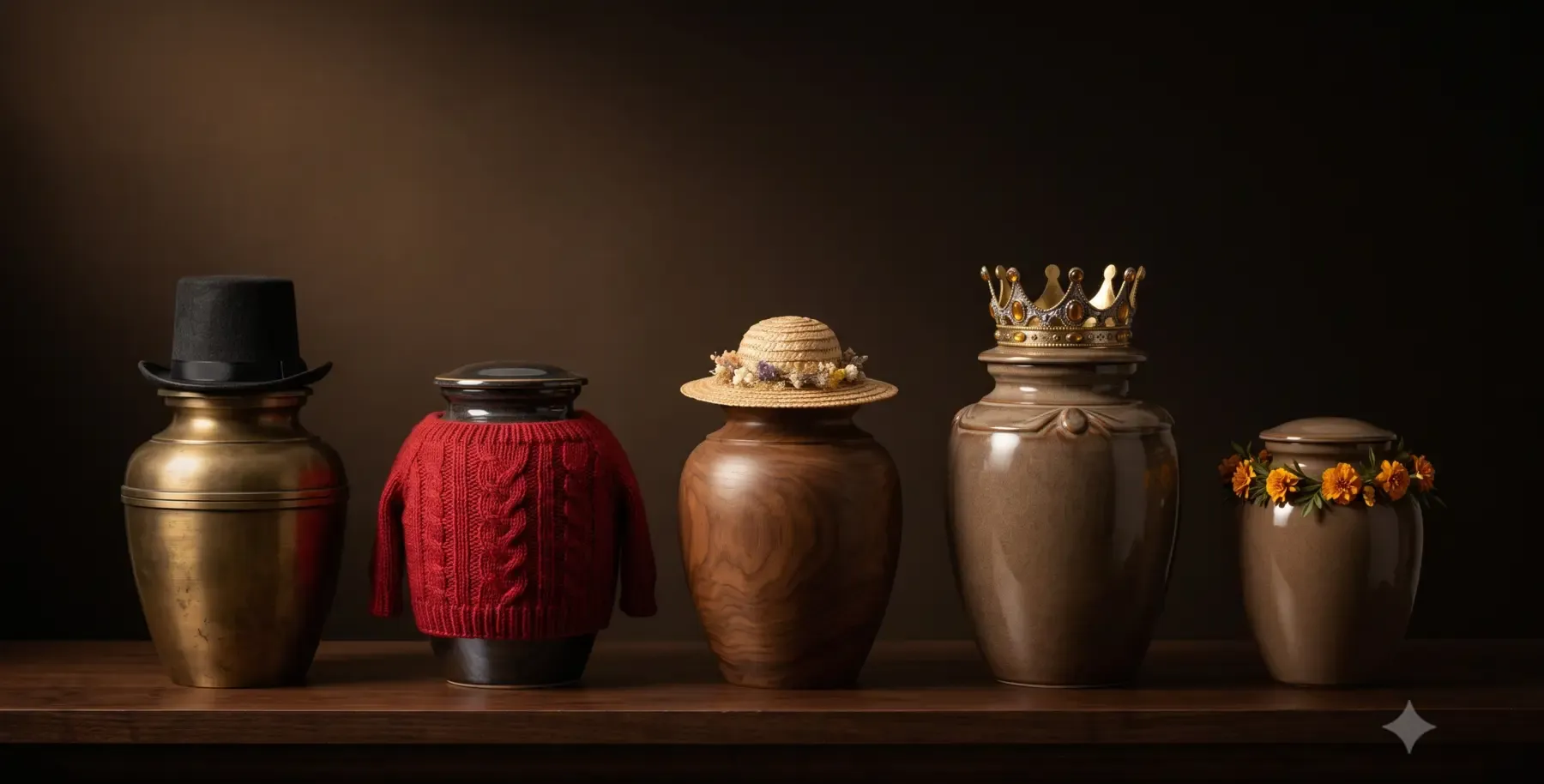
The week your pet dies, somebody hands you a menu at the vet’s office while you are still crying on the floor, and one of the things on that menu is what happens to the body after. A few weeks later, another decision: what container to put the ashes in when they come back.
This page is about that container. No upsell, no reverence theater. Two rosewood resin urns, one sized for cats and one for dogs, both under $35, both with a seal kit. Here is what they are and what they are not.
The size math, done
The standard calculation: one cubic inch of urn capacity per pound of body weight before cremation. A 10-pound cat needs about 10 cubic inches; a 60-pound dog needs about 60. Buy some headroom above that number, not right at the floor.
The small cat urn is sized for standard cats, which run 8 to 15 pounds in most cases. There is enough capacity and then some. No math required.
The large dog urn holds 180 cubic inches, which covers dogs up to about 180 pounds. Most breeds land well under that. If you had a Great Dane pushing 200 pounds, size up. If you are not certain of the exact ash volume, ask the cremation facility directly. They know, and telling you is part of the service you already paid them for. Our pet cremation cost guide covers how to ask the right questions before and after the service.
What “rosewood resin” means, and why it is fine
Neither urn is solid rosewood. “Rosewood resin” means composite or resin construction with a rosewood-tone finish. The grain pattern is applied, not carved.
At this price this is the expected answer, not a failure. Solid hardwood pet urns run $80 to $200. These run under $35. For something sitting on a shelf at arm’s length, the visual difference is not there. The structural question is whether the lid seals, which brings us to the seal kit.
If you want the comparison point for a human-sized urn at a similar price, we covered the rosewood wood adult urn with the same notes on construction.
What the seal kit actually does
A seal kit is usually a rubber or silicone gasket around the lid, sometimes with a small fill funnel. What it does: it gives you a proper closure. The ashes stay in place if the urn tips, moves, or gets packed into a bag.
Without a seal, an urn on a stationary shelf is still fine. The seal matters the moment the urn leaves that shelf. The fill funnel, when included, is useful exactly once and saves you from a very bad afternoon.
The actual cons
Small cat urn: the product listing does not specify exact cubic-inch capacity in the title, which every pet urn should do and many do not. Based on standard sizing for this form factor, it covers cats and small dogs without issue. If your pet weighed over 20 pounds, confirm the exact capacity with the seller before buying.
Large dog urn: “rosewood resin” describes a range of constructions. Expect a composite finish regardless of what the listing photography implies. The 180-cubic-inch capacity is reliable because it is stated clearly in the title. The material claim is softer than it sounds.
Both: Amazon QC varies by fulfillment batch. Check recent buyer reviews before ordering, especially if the price has moved or the listing looks like a new seller picked it up.
If you want to carry a small amount with you
Some people keep most of the ashes in the urn and carry a small portion separately. A cremation pendant holds a pinch and goes on a chain. Our ash pendant review covers how much actually fits and how to fill it without making a mess. You can use both, the urn and the pendant, and a lot of people do.
If your dog died recently and you are still in the first hours of it, that guide is here. Come back to this when you are ready.
In this review
In this review
Affiliate link: if you buy through it we earn a commission, you pay the same price. See ourdisclosure.
Questions people actually ask
How do I know what size urn I need for my pet?
The standard formula is one cubic inch of urn capacity per pound of body weight before cremation. A 10-pound cat needs roughly 10 cubic inches; a 60-pound dog needs roughly 60. Buy above that floor, not right at it, so there is room. If you are not sure how much ash came back, the cremation provider can tell you the exact volume. That is part of what you paid them for.
Can I put a cat's ashes in a larger dog urn?
Yes, and it is a reasonable move if you want matching urns for multiple pets or if you are leaving room to add a second animal later. The ashes are not affected by extra space. The only practical issue is proportion: a cat's worth of ashes in a 180-cubic-inch urn will look sparse if you open it, though it will look fine closed on a shelf.
What does 'rosewood resin' actually mean?
It means composite or resin construction with a rosewood-tone finish, not solid rosewood. This is the correct answer at this price point. Solid hardwood pet urns run $80 to $200. For a display piece at arm's length, the visual difference is zero. If you need something that will survive aggressive handling for decades, go solid wood or sealed brass. For the shelf, rosewood resin is fine.
Is the seal kit necessary?
Not strictly, for an urn that never moves. The seal kit, which is usually a rubber gasket and sometimes a small fill funnel, matters when the urn travels, gets stored in a bag, or gets handled by other people. If any of that applies, the seal is the difference between fine and a mess.
Reviews here carry affiliate links and we are extremely upfront about that, see thedisclosure. A commission has never bought a good review here and it is not going to start.