Splitting the ashes
One person, several people who loved them, and exactly one box. This is the most common fight in cremation, and it has a simple answer: you can divide them, it is legal everywhere, and the mechanics are less complicated than you think.
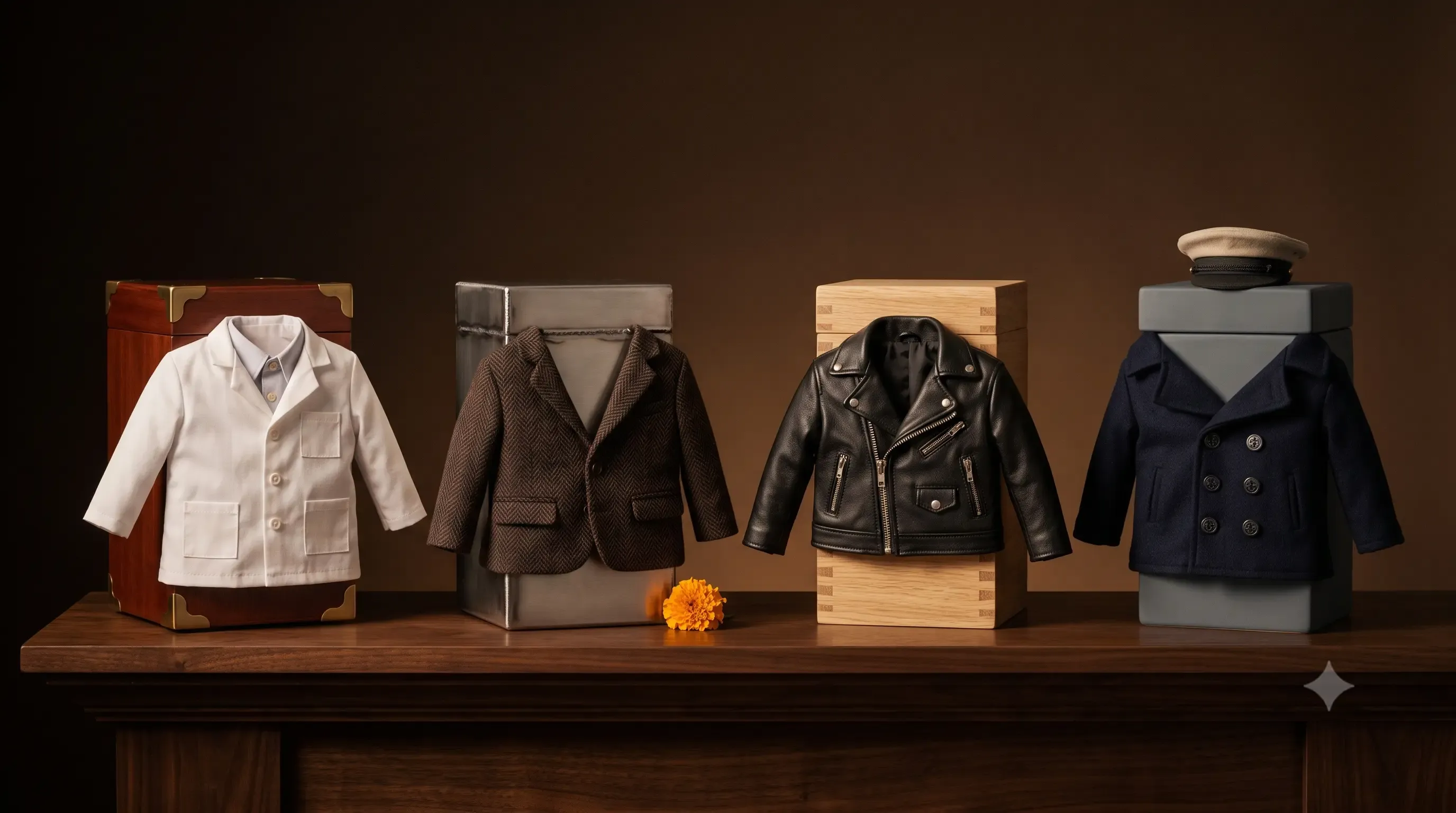
The Funeral Consumers Alliance puts it plainly: cremated remains may be “divided among family members to be kept, sprinkled or buried in several different places.” That is not a loophole. It is a mainstream option, it is legal in every US state, and you do not need the funeral home’s permission, a second death certificate, or anything else official to do it. The funeral home gets one box out of the crematory. What happens after that is yours.
Why does this come as news to so many people? Because the industry’s model is built around one purchase, and mentioning that you can split is not in its financial interest. That is the whole Reckoning pillar in one sentence.
When it makes sense to split
The most common reason is geography. Four siblings, two coasts, parents in a third city, and everybody wants something they can actually put somewhere. Splitting solves that without a scheduling negotiation that runs for two years.
Other situations that come up regularly:
- One person wants to scatter, another wants to keep. The lake scatter and the mantelpiece urn are not incompatible. There is enough for both.
- A family member wants jewelry. A cremation pendant takes about a quarter teaspoon of ash. An adult cremation returns four to six pounds of bone material. There is no contest.
- Multiple graves or niches. Some families bury a share with a surviving parent and keep the rest until that parent dies, to be buried together.
- The person had two families. Divorce, remarriage, estrangement. Sometimes giving each branch their own keepsake is the only arrangement that works.
- Pet and person together. If a pet died first and is already in a keepsake, some families add a share of a person’s ashes to join them.
What you actually get back, and how far it goes
Per the Cremation Association of North America, a typical adult cremation returns roughlyfour to six pounds of remains, which comes out to roughly180–220 cubic inches. (The rule of thumb is one cubic inch per pound of body weight before death.) It is heavier and grittier than most people expect, and pale grey, not black.
That volume splits into a lot of keepsakes. A standard keepsake urn holds about ten to twenty cubic inches. Four keepsakes, a full scatter, and a pendant for a third sibling is a reasonable split from a single 200—cu-in return. The math almost always works out. What usually does not work out is the conversation.
What you need before you start
You do not need a lot, but get this together before you open the bag:
- A surface you can clean. Outdoors or over a large tray. Cremated remains are not toxic or infectious, but they are fine powder mixed with bone fragments, and they get everywhere. Do not do this over carpet.
- A funnel and a spoon. The opening on most keepsake urns is small. A kitchen funnel works. A small spoon or a folded piece of paper for scooping. Most keepsake sets include a funnel; if yours does not, any kitchen funnel will do.
- The destination containers. Have them out, labeled or noted, before you open the bag. Trying to remember which one is which while you are covered in ash is not the vibe.
- The cremation certificate. Not needed for the split itself, but keep it with whatever portion is being flown, shipped, scattered at sea, or buried in a cemetery.
How to actually do it
Most cremated remains come back in a sealed plastic bag inside a temporary container. If so:
- Move the whole bag, still sealed, to a stable spot on your clean surface.
- Have all your destination containers open and ready. If multiple family members are there, decide the order and quantities before you open anything. Write it down.
- Open the plastic bag. Some come with a twist tie, some with a heat seal. Heat-sealed bags need scissors at the corner. Do not rush this.
- Spoon into the funnel, into the container. There is no ceremonially correct way to do this. Some families do it in near-silence. Some families do it with a drink and a story. Both are right.
- Seal each container as you go. If a keepsake uses a small screw-on cap, one drop of clear craft glue on the threads is the only thing standing between the ashes and the shower drain. Do it before you set it down.
- What is left in the bag stays in whatever primary container you have decided on, or goes to its own keepsake. A small funnel and a spatula will get most of the remaining powder out if you need it.
Stand upwind if you are doing any of this outdoors, and pour close to the surface rather than from height. Bone fragments do not drift; the fine powder does, and it will.
Container options and real prices
Keepsake urn sets
The most practical solution for most family splits. A keepsake set is usually four small urns of matching design, each holding ten to twenty cubic inches. They cost roughly$20–$50 for the set on Amazon, which makes them the cheapest per-person option by a long margin. Look for a set with a funnel included, because someone will forget to buy one.
Fit check: if somebody needs to fly with their keepsake, the lid material matters. The TSA will not open an urn even on request, so if the contents cannot be seen by X-ray the container gets turned away. Wood or plastic passes; solid metal or stone may not. An unglazed ceramic is usually visible enough; ask the TSA before you travel.
Individual full urns
If each person wants a full-size urn rather than a token amount, you are buying as many urns as there are people. A decent wood or ceramic adult urn runs$50–$120 on Amazon (our urn buying guide has specific numbers and the lid-seal comparison). This is not unusual for families where geographic separation is total and everyone wants a complete set of remains rather than a share. The 200–cu-in return will not evenly fill more than one adult urn, but it can comfortably half-fill two.
Cremation jewelry
A pendant holds a quarter teaspoon — genuinely a pinch. If two family members want jewelry and three more want keepsakes and there is still a scatter planned, that is all still possible from one cremation return. A fill-it-yourself stainless steel pendant runs$13–$26; glass, resin and fingerprint pieces go up from there; a memorial diamond has its own provider price comparison. Every format, priced and compared, is in the cremation jewellery guide.
One specific thing to check before you fill a pendant: glue the threads. Most pendants come with a small screw cap and nothing else. The glue is not included, and nobody tells you it matters until it doesn’t and you lose them.
Scatter tubes and biodegradable urns
If one portion is going to a scattering and another is being kept or buried, a scatter tube (a lightweight cardboard or bamboo container designed to pour from) keeps the portions separate and makes the scatter cleaner. Biodegradable urns serve if you are burying that portion in the ground. These run $20–$50 and can be found alongside regular urns on Amazon. Our ashes options guidecovers scatter logistics; scatter lawscovers the rules by location.
The fight that isn’t really about the ashes
Most of the disputes people end up Googling about — “my brother won’t give me part of my mother’s ashes”, “my stepmom took everything” — are not actually about the ashes. They are about who was there, who wasn’t there, who was recognised and who wasn’t, who the person loved most and who feels like they know the answer.
The ashes are a proxy. The grievance is older. If you are in that situation, know that:
- There is no law that requires the main holder to share. In the US, the person who legally claimed the remains from the crematory has the right to them. That is usually the next of kin by statute, which varies by state. If they choose not to share, the main avenue is a family conversation, not a court.
- There is no law that prevents them from sharing, either. If everybody who has a stake agrees, the split can happen whenever, in whatever proportions make sense.
- Mediation is faster than litigation. Estate disputes over cremated remains are handled in civil court and are expensive and miserable. One session with a mediator is cheaper and often more useful, especially when the underlying issue is grief.
The practical move, if you have the option, is to agree on the division before the cremation happens, and put it in writing. Not a legal document — just an email or text among the family that says “here is what we agreed.” It will not be legally binding, but it changes the conversation later, because it gives everyone a record that the decision was collective.
What you need for the split
Marble-Finish Keepsake Urn Set of 4, with funnel
Four matching urns plus the funnel most sets omit. ~10–20 cu in each, enough to split one adult return four ways and still have remains for a scatter.
What you need for the split
Stainless Steel Cremation Ash Pendant
For the family member who wants to wear a share. Takes a pinch; glue the threads before you close it.
Affiliate link: if you buy through it we earn a commission, you pay the same price. See ourdisclosure.
Legal information here reflects federal guidelines and the consensus position of the Funeral Consumers Alliance (FCA) and the Cremation Association of North America (CANA); state rules on next-of-kin hierarchy and property rights in cremated remains vary. If a dispute is heading toward legal action, the only useful advice is to call a probate or estate attorney in your state.
If the logistics are the easy part and the rest of it isn’t, our help pagelists grief resources. That is what it is for.