How to tell a $400 urn from a $60 vase with a lid
Cremation urns are one of the last retail categories nobody reviews honestly, because giving your grandmother's urn three stars feels monstrous. That silence is precisely why the markups are what they are.
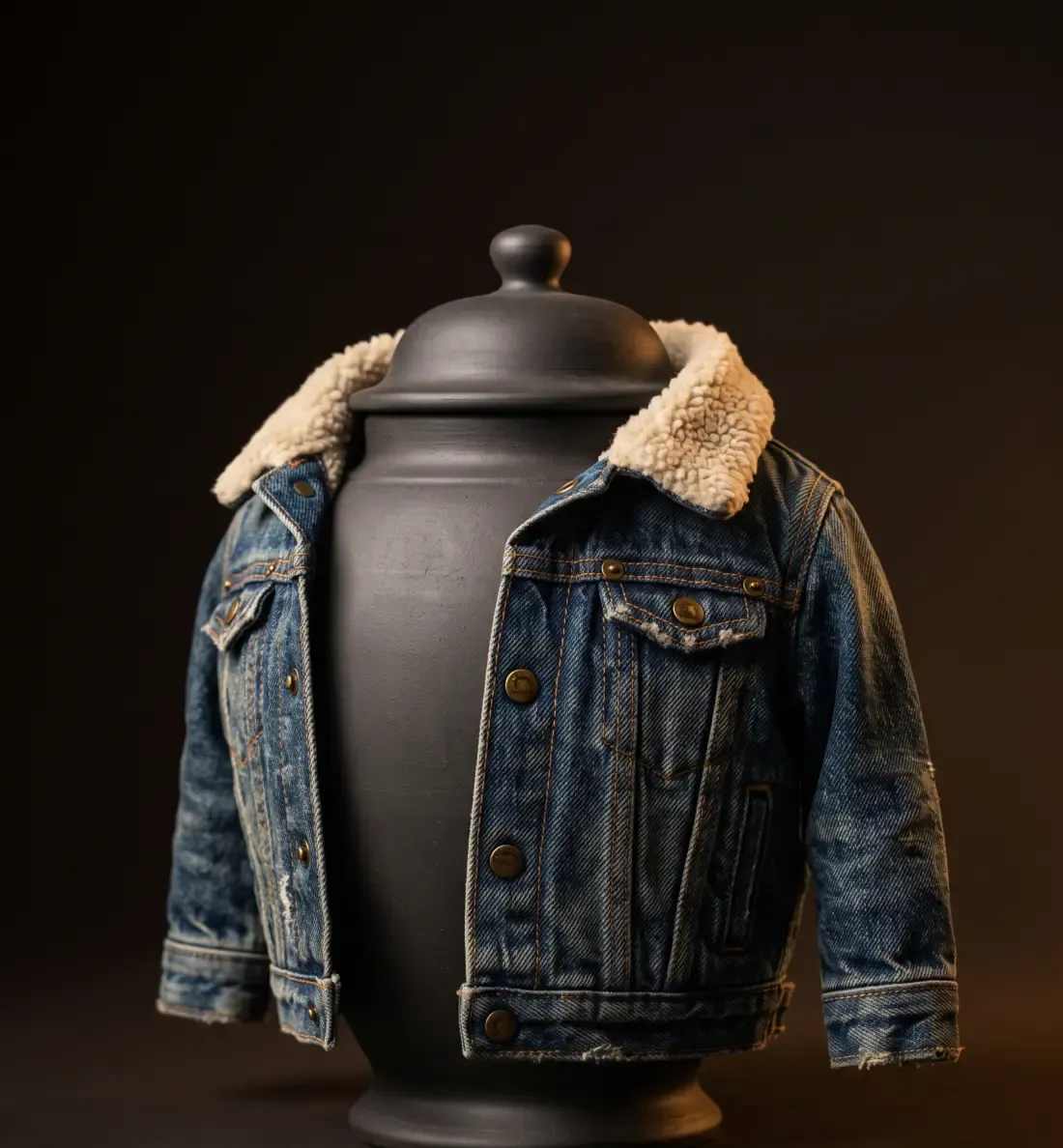
Honest reviewing requires somebody willing to say “this is fine, but it’s $340 of moulded resin and the lid doesn’t seal.” Nobody says that about urns, because saying it out loud feels like an insult aimed at a dead person. So the category has no critical press, no teardowns, no comparison charts — just perfume-ad photography and a customer 48 hours into the worst week of their life who cannot face haggling. That vacuum is the product.
The recurring theme of everything below: you are allowed to spend nothing on this, and you are allowed to spend a lot. You just need to know which one you’re doing.Buying a beautiful, expensive object because it genuinely helps is a real reason. Buying it because a man in a quiet room implied you’d be a monster otherwise is not.
1. Sizing. This is the whole ballgame.
Nothing else here matters if you get this wrong, and people get it wrong constantly because nobody tells them urns are measured in cubic inches rather than in vibes. The rule of thumb used across the entire urn trade isroughly one cubic inch of interior capacity per pound of the person’s body weight before cremation. Urns Northwest states it as “for every pound of body weight before cremation, allow one cubic inch of urn capacity,” and Memorials.com’s sizing guide runs the same maths. So a 185lb man needs a minimum of about 185 cubic inches. A 130lb woman needs about 130.
Which is where the conventional “adult” urn at around 200 cubic inches comes from — it covers most adults with room spare. If a listing says “adult” and doesn’t say a number, that’s a red flag: plenty of decorative pieces sold as adult urns come in well under 200.
This is a rule of thumb, not physics. What comes back is processed bone fragment, so volume tracks bone mass, not body weight. Memorials.com puts the average adult’s remains at four to eight pounds, and the common industry estimate at about 3.5% of original body weight. A tall, heavy-boned, slim person can outrun the one-inch-per-pound rule.
Size up. Always size up. The rule is a floor, not a target, and the failure mode is catastrophic in a way no other retail mistake is.
Because here is when you find out you got it wrong: standing at a kitchen table with an open bag of your father in one hand and an urn that is three-quarters full and will not close. No returning to the shop, no second attempt. Buy 200–220 cubic inches for an average adult, bigger if the person was big, and treat a slightly roomy urn as the cheapest insurance you will ever buy.
2. Materials, honestly
Retail urn prices run from roughly $50 to well past $1,000 for genuine artisan work, and these ranges move constantly — orientation, not gospel. What’s useful is knowing which end of the spread reflects actual manufacturing cost.
- Moulded resin with a metallic finish. The biggest value trap in the category. Cast in a mould, sprayed to look like bronze, brass, pewter or stone, priced as if it were. Cheap to make, often perfectly attractive, frequently sold at four figures. Nothing wrong with owning one; a great deal wrong with paying metal money for one. Pick it up — suspiciously light for something the size of a bronze means resin.
- Brass and bronze. Real metal, real material cost, real weight, and it will outlive everyone reading this. Also, per the TSA section below, the worst possible thing to fly with.
- Ceramic and glass. Enormously variable. A studio-thrown, hand-glazed piece is real craft. A mass-produced import with a transfer-printed motif costs very little to make. The tell is the base: signed and slightly irregular, or perfectly uniform with a felt disc glued on.
- Wood. The most honest mid-market material. Solid hardwood with proper joinery is visible, verifiable craft. Veneered MDF pretending to be walnut is not — check the corners for grain that continues around the joint.
- Stone and marble. Check whether it is quarried stone or “cultured marble,” which is stone dust in resin. Both fine objects; not the same product, and they should not carry the same price.
- Biodegradable. Paper pulp, salt, sand, plant fibre, designed to dissolve or break down in soil — so by design, cheap to make and single-use. Anything here north of about $150 wants a very good explanation.
Real examples, at correct capacity
Handcrafted Rosewood Wooden Urn, 200 cu in$37.99
States its 200 cubic inch capacity on the listing, which is the one thing to demand. Solid wood, not veneer.
Real examples, at correct capacity
Blue Flower Ceramic Urn, 200 cu in$62.99
Also states capacity up front. Lid is a lift-off finial, not threaded: fine for a shelf, wrong choice for travel or burial.
Real examples, at correct capacity
Brass Memorial Urn, 200 cu in, tight-seal lid$104.00
Real brass, actually threaded. Also the one to skip if you are flying with it, see the TSA section below.
Real examples, at correct capacity
Bamboo Scattering Urn, screw-on lid$29.99
Real bamboo, screw closure stated on the listing, nowhere near the $150 mark where a biodegradable urn stops making sense.
Affiliate link: if you buy through it we earn a commission, you pay the same price. See ourdisclosure.
3. The seal, which almost nobody checks
Three broad categories, in ascending order of actually working:
- A lid that just sits there. Gravity and optimism. This is a vase.
- A threaded lid or a screwed-down base plate. The standard “secure but reopenable” design, and the right default for most people.
- Threaded plus a gasket, or threads finished with a bead of silicone. Genuinely resistant to moisture and to being knocked over. The silicone version is effectively permanent — the funeral trade uses it for burial, niche placement and shipping, where containment beats future access.
Which you need depends on what happens next. Sitting on a shelf forever: any of them. Travelling, being posted, buried, or opened again to divide the ashes: you want threads, and you want to know before you buy whether you can get back in. A friction-fit lid in a car boot across three states is how ashes end up in upholstery.
4. Opening it again — and the bag nobody mentions
Nobody tells you this in advance: the ashes do not arrive loose. They come back in a sealed, sturdy plastic bag inside a temporary container, usually with an identification tag or disc. CANA — the Cremation Association of North America — confirms the default: “If an urn is not selected at the time of cremation, the crematory will supply a temporary container. These are usually made of plastic or aluminum.”
That bag has roughly the dimensions of a brick and does not fold gracefully. So the question to ask of any urn is: does the opening accept the bag whole, or will somebody have to pour? A narrow-necked urn can hit 200 cubic inches and still force you to decant loose ash through a funnel. Wide-mouthed urns, box urns and urns with a removable base plate take the bag intact. That difference beats any finish.
CANA also notes that a funeral home or crematory will transfer the remains into the urn for you if you ask. Ask. It is generally free, they have done it a thousand times, and there is no prize for doing it alone at the kitchen table.
5. Flying with ashes: the trap that strands people
This one is not a preference, it is a rule, and the failure mode is being separated from your parent at a security checkpoint. From the TSA’s ownCremated Remains page, verbatim:
“To facilitate screening, we suggest that you purchase a temporary or permanent crematory container made of a lighter weight material, such as wood or plastic. If the container is made of a material that generates an opaque image, TSA officers will not be able to clearly determine what is inside the container and the container will not be allowed. Out of respect for the deceased, TSA officers will not open a container, even if requested by the passenger.”
Read that twice. They will not open it, so if X-ray cannot see through it, it does not fly.Solid brass, bronze, marble and thick stone urns are a genuine problem at security. The same page lists cremated remains as permitted in carry-on “(Special Instructions)” and in checked bags, but adds: “Some airlines do not allow cremated remains in checked bags, so please check with your airline to learn more about possible restrictions.”
So: fly with a wood or plastic container, carry it on, ring the airline first, transfer into the heavy urn once you have landed. Lightweight “travel” urns are one of the very few upsells in this category earning their money.
6. Cemetery burial and the vault you didn’t see coming
If the urn is going in the ground at a cemetery, budget for a second purchase. CANA states it directly in its guidance on choosing an urn: final placement drives the choice, because “columbarium niches may limit dimensions, burial may require a vault to encase the urn.”
An urn vault is an outer container that goes around the urn underground. The Funeral Consumers Alliance explains the logic for full-size burial vaults and it applies here: ground stability, so the plot doesn’t subside under mowing equipment. The FCA is blunt that “no state laws require a vault, many cemeteries do” — private policy, not law, varying cemetery by cemetery and sometimes section by section.
For scale: the NFDA’s2023 General Price List Study puts the median casket vault at $1,695. Urn vaults are far smaller and cheaper, but they are a real line item — get the number from the cemetery in writing before you buy anything, along with niche dimensions and marker rules. The FCA notes cemeteries are largely exempt from the federal price-list rules that cover funeral homes, so nobody is obliged to volunteer any of this.
7. Splitting the ashes
Keepsake urns hold a small portion each so several people can have some. CANA describes them as “designed to hold a portion of the remains in cases where they will be divided between family members or the bulk of the remains will be scattered.”
A cubic inch is roughly a tablespoon, so a small keepsake is a genuinely small amount — do the division sum before you order, not after. Buy the set matched, because a sibling receiving the visibly smaller one becomes a twenty-year grievance. Insist on threaded closures; these get handled, posted and carried far more than a main urn ever will. And for a real share rather than a symbolic pinch, mid-size urns beat a row of thimbles.
Our pick
Marble-Finish Keepsake Urn Set of 4, with funnel$46.32
A matched set, so nobody gets the visibly smaller one, and it ships with the funnel this section just told you to check for.
Affiliate link: if you buy through it we earn a commission, you pay the same price. See ourdisclosure.
What we’d skip
- Any urn sold to you in the arrangement room without a cubic-inch figure attached.If they can’t tell you the capacity, they’re selling you an ornament.
- “Bronze-finish” and “pewter-tone” anything above about $150.Those words mean paint.
- Laser-engraved stock verse. Rainbow bridges, footprints, and “forever in our hearts” in a script font, charged as personalisation. A name and two dates is more dignified and usually cheaper.
- The “protective” sales pitch. The FCA is unambiguous that nothing marketed as sealed or airtight keeps out air, water or dirt indefinitely, and that anyone selling protection is manipulating your emotions with unrealistic promises. True of urns as of caskets.
- Matching “memorial collections.” Urn, photo frame, candle holder and four keepsakes bundled at a price that assumes you will not itemise it.
The honest bottom line
The NFDA — the funeral directors’ own trade body — recorded amedian urn price of $295 in its 2023 GPL study, flat from 2021. That is the middle of the market, not the right answer. Buying online routinely gets you the same object for a fraction, and under the FTC’s Funeral Rule a funeral home cannot refuse an urn you bought elsewhere or charge you a handling fee for using it.
Our honest read: for a well-made wood, ceramic or genuine-metal urn at a correct capacity with a threaded lid, somewhere around $80 to $250 buys everything that actually matters. Above that you are buying artistry or material, which is a legitimate thing to buy on purpose. Above about $600 you had better be able to name the artist.
And the option nobody in the room will mention: you can spend nothing. The Funeral Consumers Alliance says it outright — “you may simply use the plain container in which the ashes are returned from the crematory. The cardboard or plastic container is perfectly adequate for burial, shipping, storing, or placing in a columbarium.” You can scatter straight from it. You can put it in a wooden box you already own. You can use the ugly biscuit tin she kept the good scissors in, which is more her than any catalogue urn will ever be.
That is not disrespect. That is not cheapness. The dead have no opinion about packaging, and nobody is grading you. The only people who benefit from you feeling watched while you make this decision are the ones holding the price list.
Sources: TSA,Cremated Remains; Cremation Association of North America,Cremation Memorial Options; Funeral Consumers Alliance,Cremation Explained and Guide to Cemetery Purchases; NFDA 2023 GPL Study; sizing and ash-weight figures fromUrns Northwest andMemorials.com.
Prices in this category move constantly and vary by region — use the ranges to spot a fleecing, then get your own quotes. TSA and airline policy can change; check the TSA page and ring your airline before you fly. Cemetery vault requirements are set by individual cemeteries, so get yours in writing. We are writers, not funeral directors.