What to do with the ashes: every option, priced and legal
Somebody handed you a heavy box and went back inside. There is no deadline, almost no law, and far more choice than the funeral home brochure lets on.
Here is the first thing, and it takes the pressure off everything after it: you do not have to decide anything yet. Cremated remains are not a health hazard, they do not go off, and in most of the United States nothing legally obliges you to do anything with them at all. The Funeral Consumers Alliance notes that you “may simply use the plain container in which the ashes are returned from the crematory.” Plenty of people keep a parent in the hall cupboard for three years while the family argues about the lake. That is not a failure. That is a normal family.
The second thing: what you have is not dust. Per the Cremation Association of North America, the average adult comes back as four to six pounds of processed bone, ground until the pieces are less than an eighth of an inch. It is heavier than you expect, grittier than you expect, and pale grey rather than black. People are routinely startled by it. You are allowed to be.
If the ashes are a dog’s or a cat’s, the options are mostly the same but the amounts, the costs and a couple of the rules are not: what to do with pet ashes is the version for them.
First, what is actually in the box
The ashes almost always come back in a sealed plastic bag inside a temporary container — a black plastic box or a cardboard carton with a label on it. That label usually carries an ID number that matches a metal disc the crematory keeps with the body through the whole process. Keep the paperwork that came with it, specifically the cremation certificate and a copy of the death certificate. You will want both if you ever fly with the ashes, bury them in a cemetery, or send them overseas.
Do not throw the bag away when you move them into an urn. Most people leave the bag in and put the whole thing inside. It saves you pouring a person through a funnel over the kitchen sink, which is a scene nobody needs in their memory.
The options, roughly from cheapest to dearest
1. Keep them at home
Cost: nothing, or whatever you spend on a container. Legal everywhere in the US. The temporary box is fine. A biscuit tin is fine. The vase your grandmother loved is fine. If you want a proper urn, the only number that matters is capacity: about one cubic inch per pound of body weight, so roughly 200 cubic inches covers most adults. Oururn buying guide covers sizing, materials, which lids actually seal, and what you should pay.
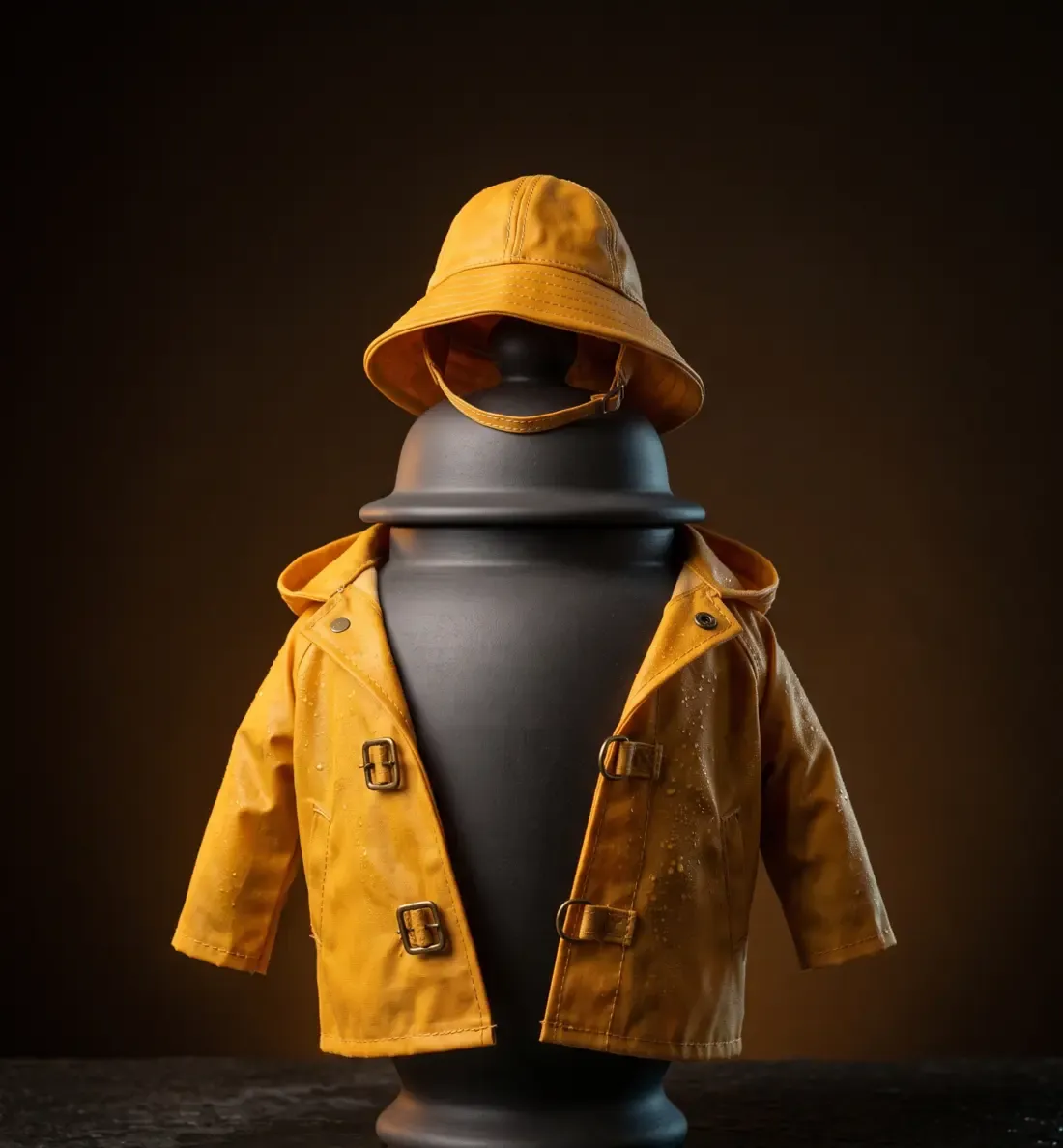
And yes, you can put a hat on it. We have strong views on this.
2. Scatter them somewhere that mattered
Cost: usually free; some national parks charge a permit fee. The FCA puts it plainly: scattering over an area with special significance “is legal in most jurisdictions.” On your own land, or anyone else’s with their permission, you are fine in every state. Public land and water have rules, and they are not complicated, but they are different for the ocean, rivers, and national parks. We wrote the whole thing up separately:where it is legal to scatter ashes.
Practical note nobody gives you: stand upwind. Pour low, close to the ground or the water, rather than flinging. Bone fragments do not drift like smoke, they drop, and the rest goes wherever the wind was going. There is a whole genre of family story that starts with somebody ignoring this.
3. Bury them
Cost: free on private land; a cemetery plot is the expensive version. The FCA says you may “bury the cremated remains on your own land, or on another’s property with the owner’s permission.” Under a tree in the garden is the classic, and a biodegradable urn is built for exactly this. Bear in mind you will not be taking them with you if you sell the house.
In a cemetery, ashes can go into a regular grave (often on top of a family member’s, if the cemetery allows it) or a dedicated cremation section. Green cemeteries sell plots for cremated remains too; the FCA puts those at roughly $200 to $1,000, against $1,000 to $4,000 for a full body. Conventional cemeteries will also charge an opening-and-closing fee and may insist on an urn vault. That is cemetery policy, not law. Get every number in writing before you agree to anything; our green burial guide has the full breakdown.
4. A columbarium niche
Cost: varies hugely by cemetery; get the price list. A niche is a small locked compartment in a wall, often in a mausoleum or a garden wall at a cemetery or church. It gives the family a place to visit without a grave. The FCA notes the plain temporary container is “perfectly adequate” for a niche, so check the niche’s interior dimensions before buying an urn to go in it. Many are smaller than a standard adult urn.
5. Split them between people
Cost: a set of keepsake urns. This is the solution to most family fights about where Mum should go: she can go to several places. The FCA lists dividing remains “among family members to be kept, sprinkled or buried in several different places” as an ordinary option. Keepsakes hold a few cubic inches each. Do it outdoors or over a tray, with a funnel and a spoon, with somebody you love and probably a drink. The mechanics, the container options, and how to handle the family argument that isn’t actually about the ashes are in the splitting ashes guide.
6. Burial at sea
Cost: free if you charter nothing; a boat costs what a boat costs. Federal law is surprisingly relaxed about this. Under the EPA’s general permit, cremated remains may be placed in ocean waters of any depth as long as it is at least three nautical miles from land, and you must tell the EPA within 30 days using its online Burial at Sea reporting tool. That’s it. Decomposable flowers and wreaths are allowed; plastic ones are not.
If the dead person was in the military, the FCA notes that service members, retirees, veterans and their dependents “may have their remains scattered at sea free of charge by the Navy or Coast Guard.” The family does not attend, but you get a certificate and the coordinates. Plenty of families never hear this exists.
7. Wear them
Cost: around $20 to $25 for the pendant we reviewed; a great deal more for the glass, resin and diamond end.A cremation pendant is a small sealed vessel holding a pinch of ash. It is the cheapest way to carry somebody with you and the one most people end up wearing every day. Ashes can also be fused into glass or set in resin. Check how the item seals before you buy: threads plus a little glue on the screw is what you want, because “lost Dad in the shower drain” is not the story you are going for. We reviewed one: the memorial ash pendant. Every other kind, priced and compared, is in ourcremation jewellery guide, and ourashes-to-diamonds cost guide compares actual provider prices, size by size.
8. Take them somewhere far away
Flying with ashes in the US is allowed, and the TSA is unusually gentle about it: “Out of respect for the deceased, TSA officers will not open a container, even if requested by the passenger.” The catch is the flip side of that. If the container is opaque to the X-ray — lead-lined, thick metal, some stone — and the officer cannot see inside it, it will not be allowed through. TSA recommends wood or plastic. Carry the temporary plastic box if the urn is metal, and carry the cremation certificate either way. Airlines and other countries have their own rules; call the airline before you book. The full detail is in theurn guide.
What we would actually do
- Put the box somewhere safe and stop thinking about it for a month. There is no clock.
- Ask everybody who has a claim on this person what they want. Write it down. You will find out that two of them want a keepsake, one wants the lake and one wants nothing at all.
- Split accordingly. Keepsakes for the people who want something to hold, the rest scattered or buried in the place that mattered.
- Make the scattering an event. A wake, not a funeral. Bring the stories nobody could tell at the service. Bring a bottle. Stand upwind.
The ashes are not the person. They are what is left after the person, which is a different thing and also, somehow, the most important box you will ever own. Both of those are true at once. Treat it accordingly.
If you want something to put them in
Bamboo Scattering Urn, screw-on lid
For carrying them to the place, scattering from it, or burying the whole thing under a tree.
If you want something to put them in
Marble-Finish Keepsake Urn Set of 4, with funnel
For splitting between people. Comes with the funnel, which is the part everybody forgets.
If you want something to put them in
Handcrafted Rosewood Wooden Urn, 200 cu in
Full adult capacity, solid wood, and wood is what the TSA asks you to fly with.
Affiliate link: if you buy through it we earn a commission, you pay the same price. See ourdisclosure.
State and local rules vary and they change, especially for inland waters and public land. Where this page quotes a federal agency, it is that agency’s current guidance; anything that matters legally in your state, check with the state or with someone licensed there.
If the box is the easy part and the rest of it is not, our help page lists grief and crisis lines, human and animal. That is what it is for.